
Introduction
Coal mining companies are under constant pressure to improve productivity while maintaining profitability in an increasingly competitive industry. Rising operating costs, fluctuating coal prices, stricter environmental regulations, and complex geological conditions require mining companies to make faster and more accurate planning decisions. At the same time, engineers must balance production targets with coal quality, stripping ratios, haulage efficiency, and resource recovery to ensure sustainable mining operations.
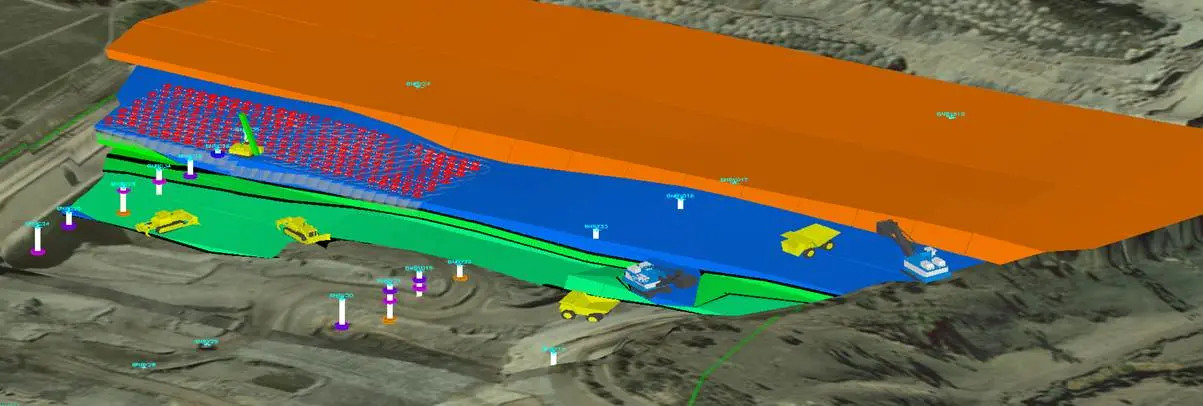
Optimizing coal mining operations therefore requires more than simply producing a mine design. It demands an integrated workflow that connects geological modeling, resource evaluation, pit optimization, haulage planning, and production scheduling. By combining these processes within a single platform, mining companies can reduce planning uncertainty, evaluate multiple development scenarios, and make informed decisions throughout the mine life cycle. GEOVIA Minex was specifically developed to support this integrated approach for coal and stratified deposits, helping mining teams improve efficiency while maximizing the value of their resources.
Why Coal Mine Optimization Matters
Mine planning is one of the most critical stages in coal mining because every planning decision directly affects operational performance and project profitability. Inaccurate geological models may result in incorrect reserve estimation, while inefficient pit designs can increase waste movement and haulage costs. Similarly, poor production planning may lead to inconsistent coal quality, lower equipment utilization, and missed production targets.
As mining projects become larger and more complex, companies must evaluate geological, operational, and economic factors simultaneously. This requires planning tools capable of integrating multiple datasets and generating reliable scenarios that support better decision-making. An optimized mine plan helps reduce operational risks, improve coal recovery, and maximize the economic value of the deposit throughout its life cycle.
Some common challenges in coal mine optimization include:
Complex seam geometry and geological structures.
Variations in coal quality across different seams.
High stripping ratios and waste movement.
Increasing haulage distances and transportation costs.
Frequent revisions to production plans.
Managing large volumes of geological and operational data.
How GEOVIA Minex Optimizes Coal Mining
GEOVIA Minex provides an integrated solution designed specifically for coal and stratified deposits. Rather than treating geology, mine design, and production planning as separate activities, Minex connects each stage of the planning process into a unified workflow. This integration enables mining engineers to improve planning accuracy, reduce manual data transfer, and respond more quickly to changing operational conditions.
Accurate Geological Modeling
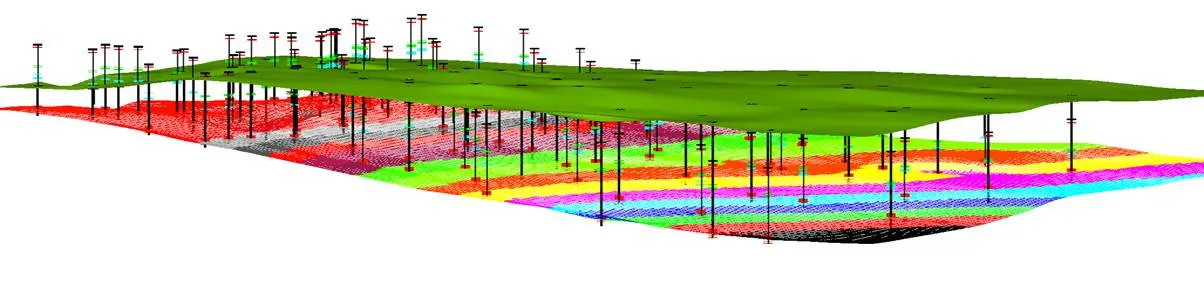
Every successful mine plan begins with a reliable geological model. Geological uncertainty remains one of the biggest risks in coal mining because inaccurate seam interpretation can affect reserve estimation, pit design, and production schedules.
GEOVIA Minex enables geologists to manage drilling data, interpret seam continuity, model geological structures, and build three-dimensional seam models within a single environment. Because geological information remains connected throughout the planning workflow, engineers can make better-informed decisions while minimizing the risk of unexpected geological conditions during mining.
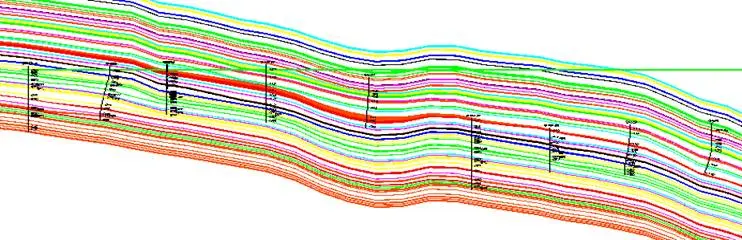
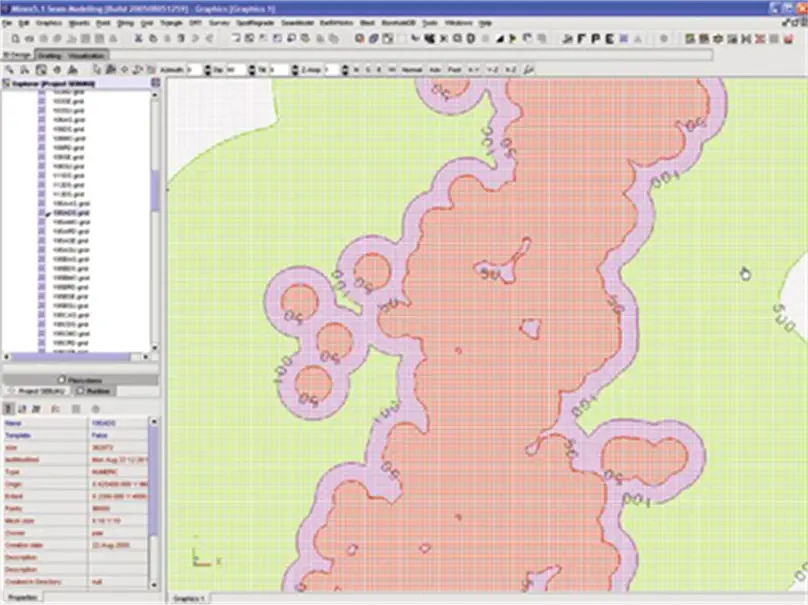
Unfault the borehole seam positions and create the geologic model (Source: Dassault Systèmes GEOVIA)
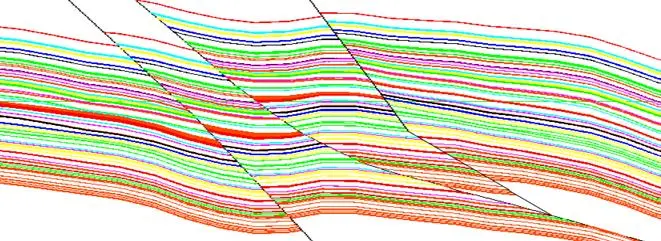
A more accurate geological model provides several advantages:
Improved confidence in resource and reserve estimation.
Better understanding of seam continuity.
Reduced geological uncertainty.
More reliable mine planning decisions.
Faster collaboration between geologists and mine planners.
Coal Quality and Washability Modeling
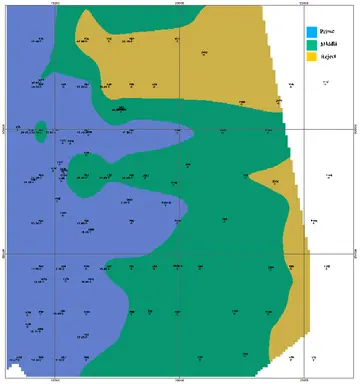
Optimizing coal mining is not only about increasing production but also about delivering products that consistently meet customer specifications. Coal quality parameters such as ash content, sulfur, moisture, calorific value, and washability directly influence product value and processing performance.
GEOVIA Minex integrates coal quality data into the geological model, allowing engineers to evaluate quality distribution before mining begins. This capability supports predicts washing performance, and estimates product yield from different mining scenarios. By considering coal quality during the planning stage, companies can maximize product value while maintaining operational efficiency.
Key benefits include:
Better prediction of product quality.
Support for coal preparation plant planning.
Increased consistency in customer specifications.
Higher economic value from coal resources.
Optimizing Open Pit Design
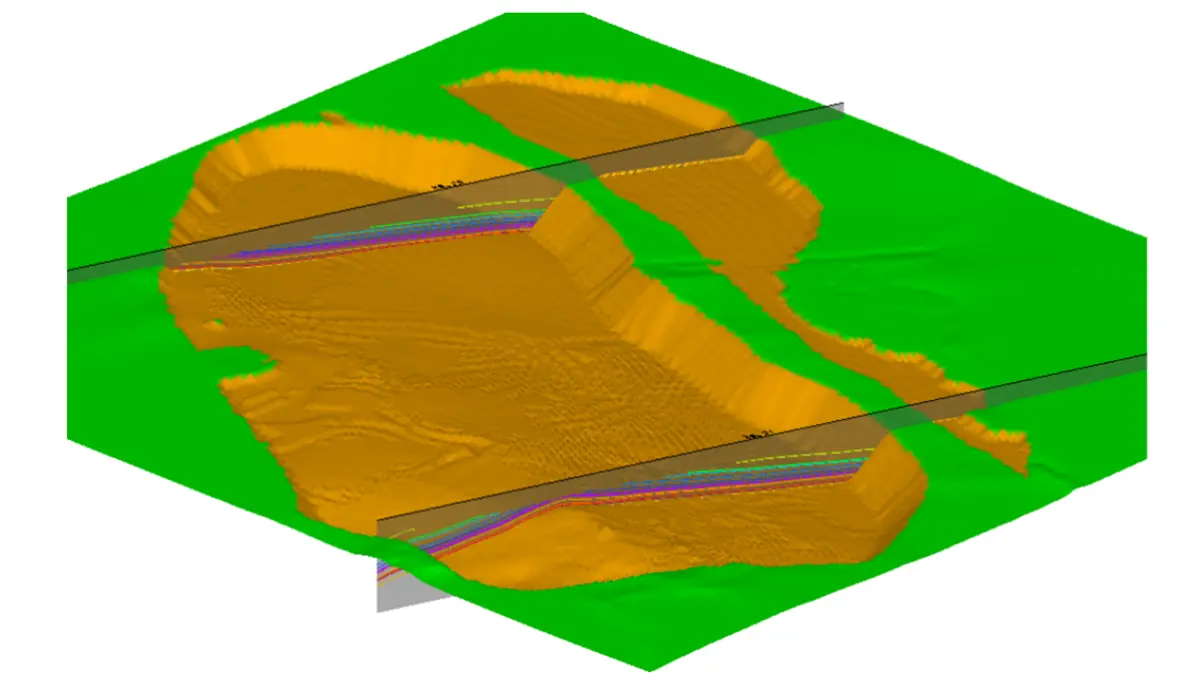
Once geological confidence has been established, the next objective is to develop a mine design that maximizes project value while minimizing unnecessary waste movement. An optimized pit should balance technical constraints with economic objectives, ensuring that mining activities remain profitable throughout the operation.
GEOVIA Minex includes an integrated Pit Optimizer that applies the Lerchs-Grossmann optimization algorithm to identify economically optimal pit limits based on revenue, mining costs, processing costs, and slope constraints. Engineers can then transform optimized pit shells into detailed pit designs complete with benches, ramps, haul roads, and mining blocks without leaving the Minex environment.
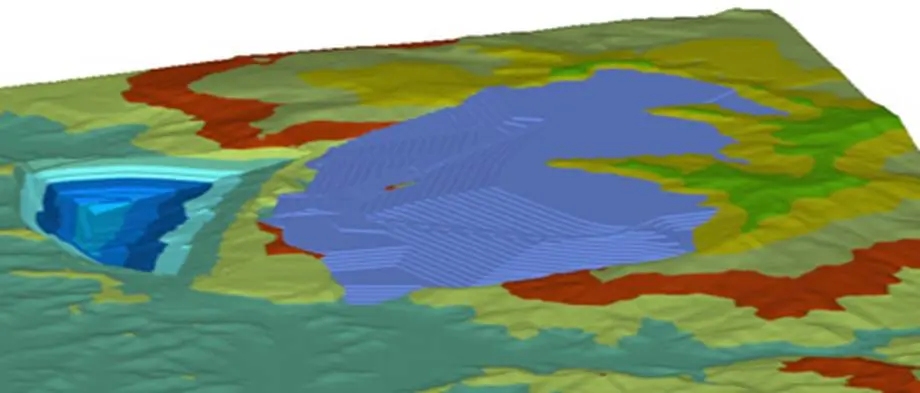
This integrated workflow reduces redesign efforts and enables faster evaluation of alternative mine designs whenever geological conditions or economic assumptions change.
Optimizing Haulage Planning
Haulage is one of the largest contributors to operating costs in surface coal mining. As mining progresses deeper into the pit, haul distances increase, fuel consumption rises, and equipment productivity can decline if haulage routes are not properly planned. Inefficient waste dump allocation or frequent changes to haul roads may also create bottlenecks that affect overall production performance.
GEOVIA Minex helps optimize haulage planning by integrating haul road design, dump scheduling, and scenario evaluation into the mine planning workflow. Engineers can compare different waste dump strategies, estimate haul distances, evaluate truck cycle times, and analyze multiple haulage scenarios before implementation. By selecting the most efficient haulage strategy, mining companies can reduce transportation costs, improve equipment utilization, and support more consistent production performance.
Key Benefits
Optimize haul road layouts for improved efficiency.
Evaluate multiple dump and haulage scenarios.
Improve truck utilization and fleet productivity.
Lower overall hauling costs.
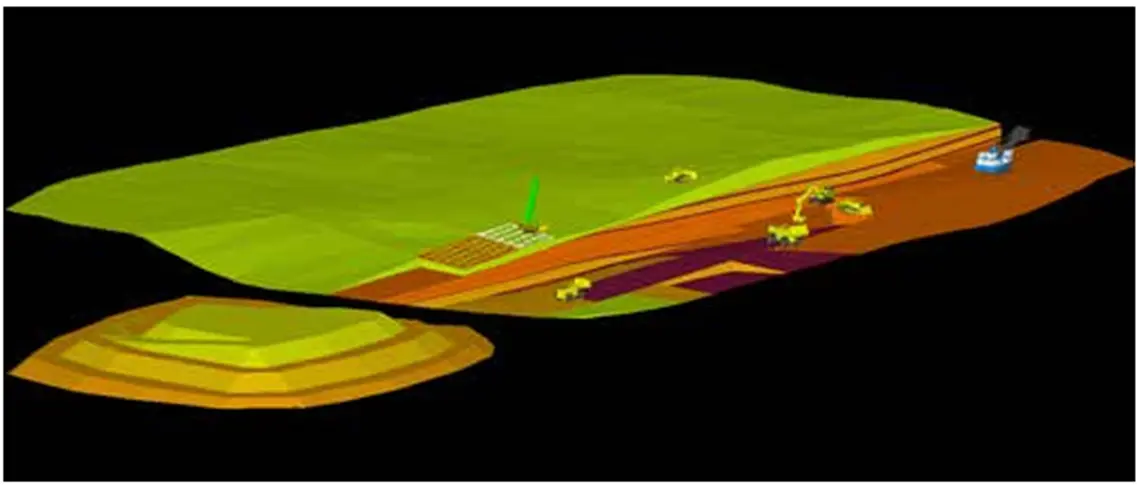
Production Scheduling and Scenario Evaluation
Mine plans must continuously adapt to changing geological conditions, operational constraints, and production targets. Without the ability to evaluate alternative scenarios quickly, companies may experience production delays, inefficient equipment allocation, or lower coal recovery.
GEOVIA Minex enables mining engineers to develop production schedules while considering mining sequences, equipment availability, operational calendars, and production targets. Interactive scheduling tools allow planners to compare multiple "what-if" scenarios before selecting the most practical strategy. This flexibility enables mining teams to respond more quickly to operational changes while maintaining production objectives and controlling mining costs.
Key Benefits
Create practical production schedules.
Compare multiple mining scenarios.
Improve equipment allocation.
Support better production forecasting.
Integrated Mine Planning Workflow
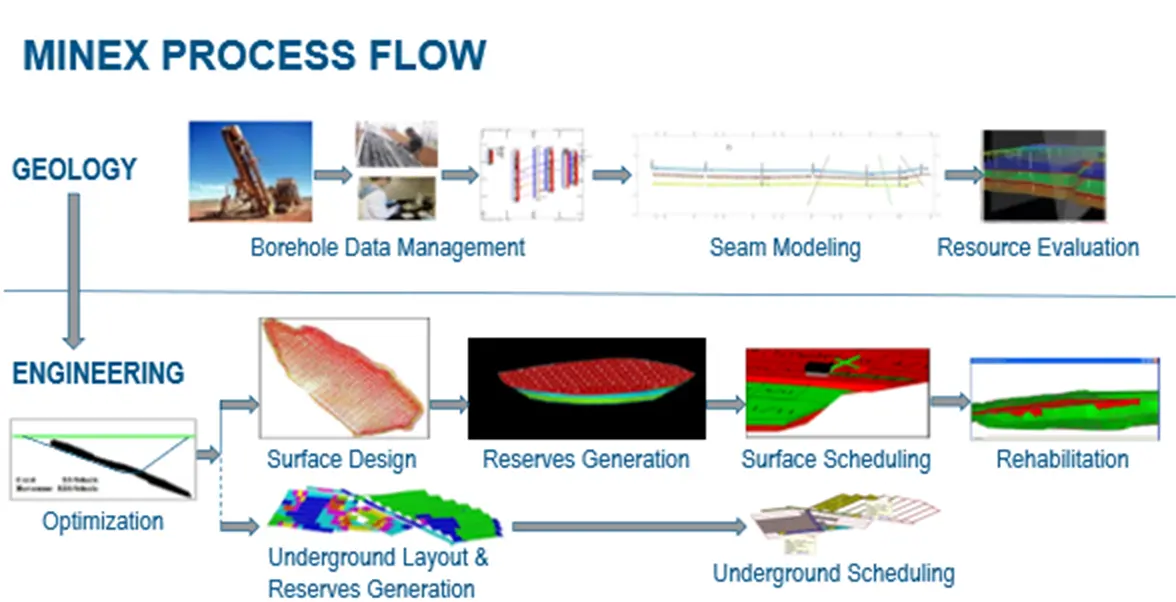
One of the biggest challenges in mine planning is maintaining consistency between geological data and engineering designs. When different departments use separate software, data often needs to be exported, converted, and validated multiple times. This fragmented workflow increases the risk of inconsistencies, consumes valuable engineering time, and slows decision-making.
GEOVIA Minex addresses these challenges by integrating geological modeling, resource estimation, pit optimization, mine design, haulage planning, production scheduling, and reporting within a single platform. Because all planning activities are connected to the same project database, updates to geological models or mine designs can be reflected throughout the workflow with minimal manual effort. This integrated approach improves collaboration between geologists, mine planners, and production engineers while reducing data duplication and increasing planning efficiency.
Why Choose GEOVIA Minex?
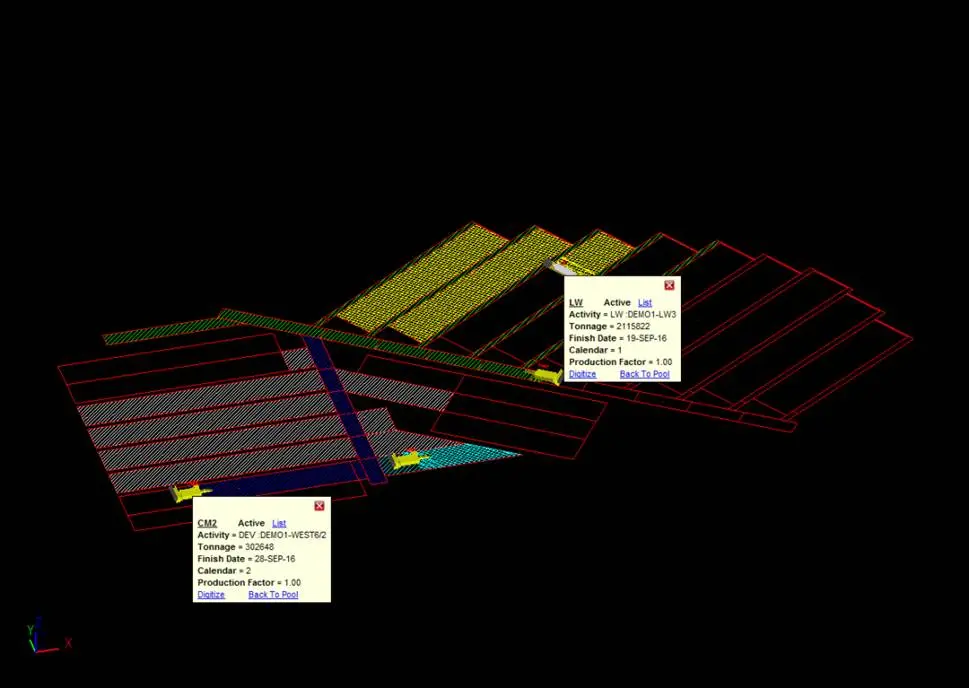
GEOVIA Minex has been developed specifically for coal and stratified deposits. Its specialized workflow supports the complete mine planning process, from borehole data management and geological modeling to reserve estimation, pit optimization, haulage planning, production scheduling, and mine rehabilitation.
Another key advantage is the ability to evaluate technical and economic scenarios using a consistent dataset. This allows mining companies to assess the impact of changes in coal quality, production targets, haulage strategies, or pit designs without rebuilding models in different applications. As a result, planning becomes faster, more reliable, and better aligned with business objectives.
Key Benefits of GEOVIA Minex
Optimizing coal mining operations requires more than advanced software it requires an integrated planning approach that connects geological information, engineering design, and production planning. By combining these functions into a single workflow, GEOVIA Minex helps mining companies improve planning accuracy, reduce operational risks, and make better business decisions throughout the mine life cycle.
Key benefits of GEOVIA Minex include:
Improve geological confidence through accurate seam and structural modeling.
Optimize coal quality management using integrated quality and washability modeling.
Maximize economic value with pit optimization based on technical and financial parameters.
Reduce haulage costs through optimized haul road design and dump scheduling.
Accelerate mine planning by eliminating repetitive data transfer between different software.
Evaluate multiple mining scenarios to support better operational decisions.
Enhance collaboration between geologists, mine planners, and production engineers using a single data environment.
Support sustainable mine planning by incorporating rehabilitation planning into the overall workflow.
Conclusion
Coal mine optimization is a continuous process that requires accurate geological information, efficient mine design, effective haulage strategies, and reliable production planning. When these activities are performed using disconnected workflows, mining companies often face duplicated data, longer planning cycles, and increased operational uncertainty.
GEOVIA Minex brings these critical planning processes together within a single integrated platform, enabling mining teams to improve planning accuracy, evaluate multiple development scenarios, and optimize operational performance throughout the mine life cycle. By supporting better collaboration and more informed decision-making, GEOVIA Minex helps coal mining companies maximize resource value while improving operational efficiency.
References
Dassault Systèmes. GEOVIA Minex. GEOVIA Minex
Dassault Systèmes. GEOVIA Mine Planning & Design. GEOVIA Mine Planning & Design
Dassault Systèmes. GEOVIA Solutions. GEOVIA Solutions
Dassault Systèmes. GEOVIA Minex Brochure (official product brochure).
Dassault Systèmes. GEOVIA Minex Compelling Value (official marketing document).