
Quarry is a type of surface open-pit mining used to extract materials of industrial mineral group such as limestone, granite, or aggregates and many more. Industrial mineral extraction is generally considered simpler than coal or other metal mining. However, this does not eliminate the operational risks in quarry activities. In practice, maintaining product quality consistency, ensuring accurate volume calculations, and daily production efficiency remain key challenges—especially when data is not properly managed or integrated.
As technology continues to evolve, the need for more efficient, data-driven mining processes is increasing. In his study, Sobko et al. (2021) said that by utilizing mining software into mine planning can be resulted in increasing operational efficiency and production capacity. Mining software such as GEOVIA Surpac and GEOVIA MineSched plays a crucial role in enabling structured planning and better decision-making.
Within the Quarry operation process, GEOVIA Surpac and GEOVIA MineSched can support the main quarrying workflow from geological modeling and resource estimation, survey data processing, mine designing, until production planning. Understanding these concepts is essential, as every stage of quarrying directly impacts operational efficiency, safety, and product quality.
Geological Modeling: Understanding the Deposit
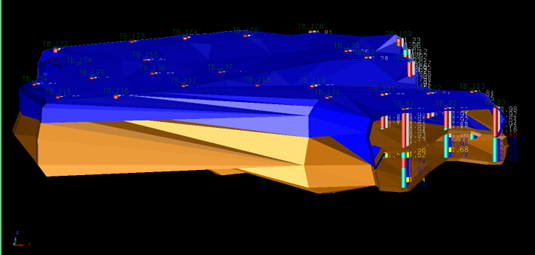
In any mining operation, understanding the geological characteristics of a deposit is a critical first step. This is a key part of the quarrying meaning, where decisions must be based on accurate and well-managed data.
GEOVIA Surpac supports this process by enabling drillhole data processing, geological visualization, and 3D geological modeling. These capabilities allow engineers to better understand deposit boundaries and quality variations, forming a strong foundation for mine planning.
Resource Estimation: Understanding Quarried Definition
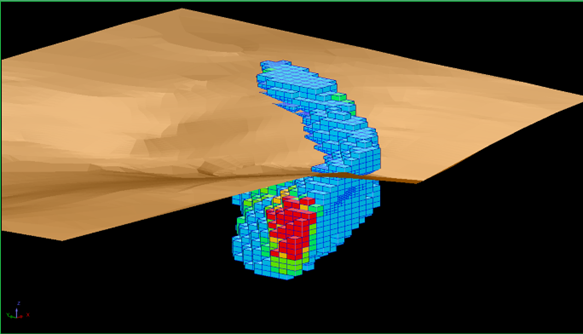
The next step is determining how much material can be extracted. This process relates to the quarried definition, which refers to materials that have been or can be extracted from a quarry.
GEOVIA Surpac facilitates resource estimation through block modeling and interpolation methods such as Inverse Distance Weighting (IDW). The results can be presented in both reports and visual formats, supporting accurate and data-driven decisions.
Survey Data Processing in Quarry Operations
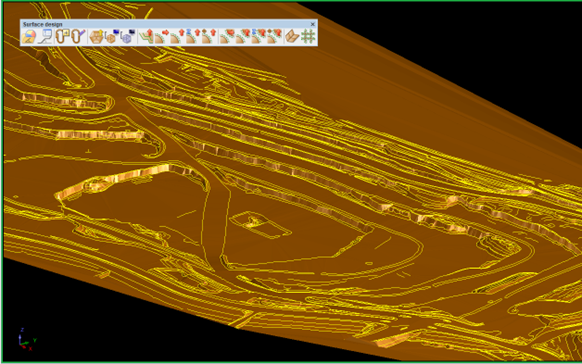
Within the context of quarry meaning, field conditions are constantly changing due to ongoing production activities. Therefore, regular updates through survey data are essential.
Survey data—collected from field measurements, drones, or other methods—is processed into updated 3D surface models. These models are used for volume calculations, reconciliation, and performance evaluation.
GEOVIA Surpac enables the integration of various data formats such as point clouds, shapefiles, and CSV into a single workflow, improving efficiency and accuracy.
Quarry Design: Turning Data into Plans
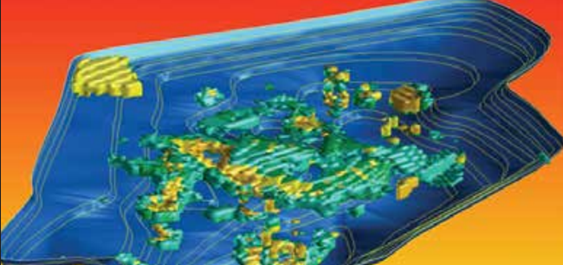
Quarry design is where the geologic model and knowledge is translated into practical and operational plans.
Design elements typically include benches, slopes, and haul roads, all of which must consider geological and topographical conditions. Proper design improves safety, reduces operational risks, and enhances productivity.
With GEOVIA Surpac, engineers can efficiently create designs using CAD-based tools integrated with geological data, ensuring technically sound and economically viable plans.
Mine Scheduling in Quarrying Operations
In the broader scope of quarrying meaning, mine scheduling plays a crucial role in determining when and how materials are extracted.
GEOVIA Minesched enables efficient scheduling by allowing engineers to define mining sequences, allocate materials, and optimize production based on constraints such as equipment capacity and production targets.
Drilling and Blasting: From Quarry to Quarried Material
For hard rock materials such as limestone or andesite, blasting is a key process in fragmentation.
This is where the quarried meaning becomes tangible—referring to materials that have been successfully extracted through drilling and blasting processes.
GEOVIA Surpac supports blast design, including drillhole layout and volume estimation, all within an integrated workflow connected to geological and mine design data.
Benefits of Digital Integration in Quarry Operations
As geological resources continue to decline, efficiency and sustainability become increasingly important.
A data-driven approach is essential to fully optimize the quarry meaning in modern operations. From geological modeling to daily production, integrated data enables more controlled, consistent, and informed decision-making.
The use of GEOVIA Surpac and Minesched helps create a more efficient, integrated, and adaptable quarry workflow.